

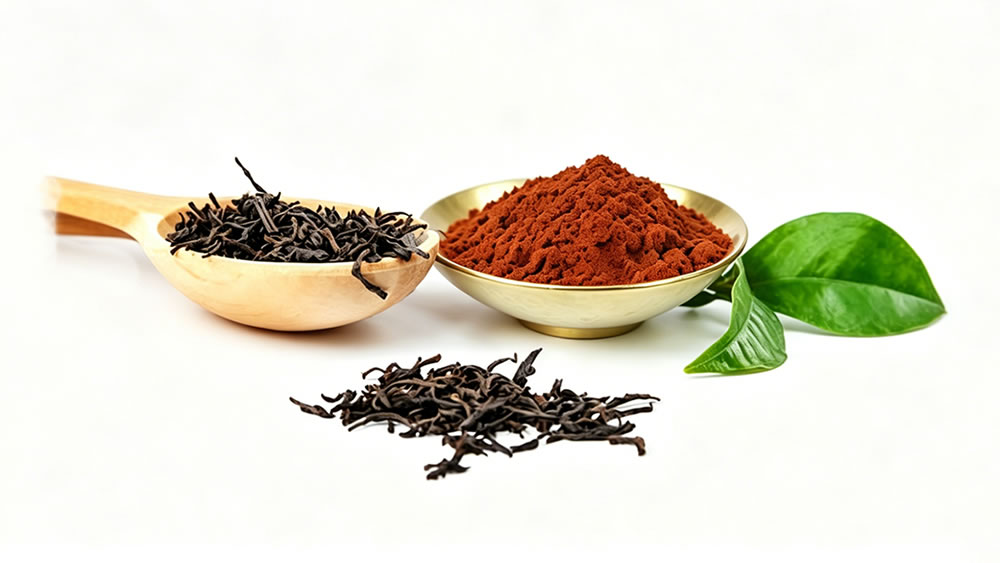
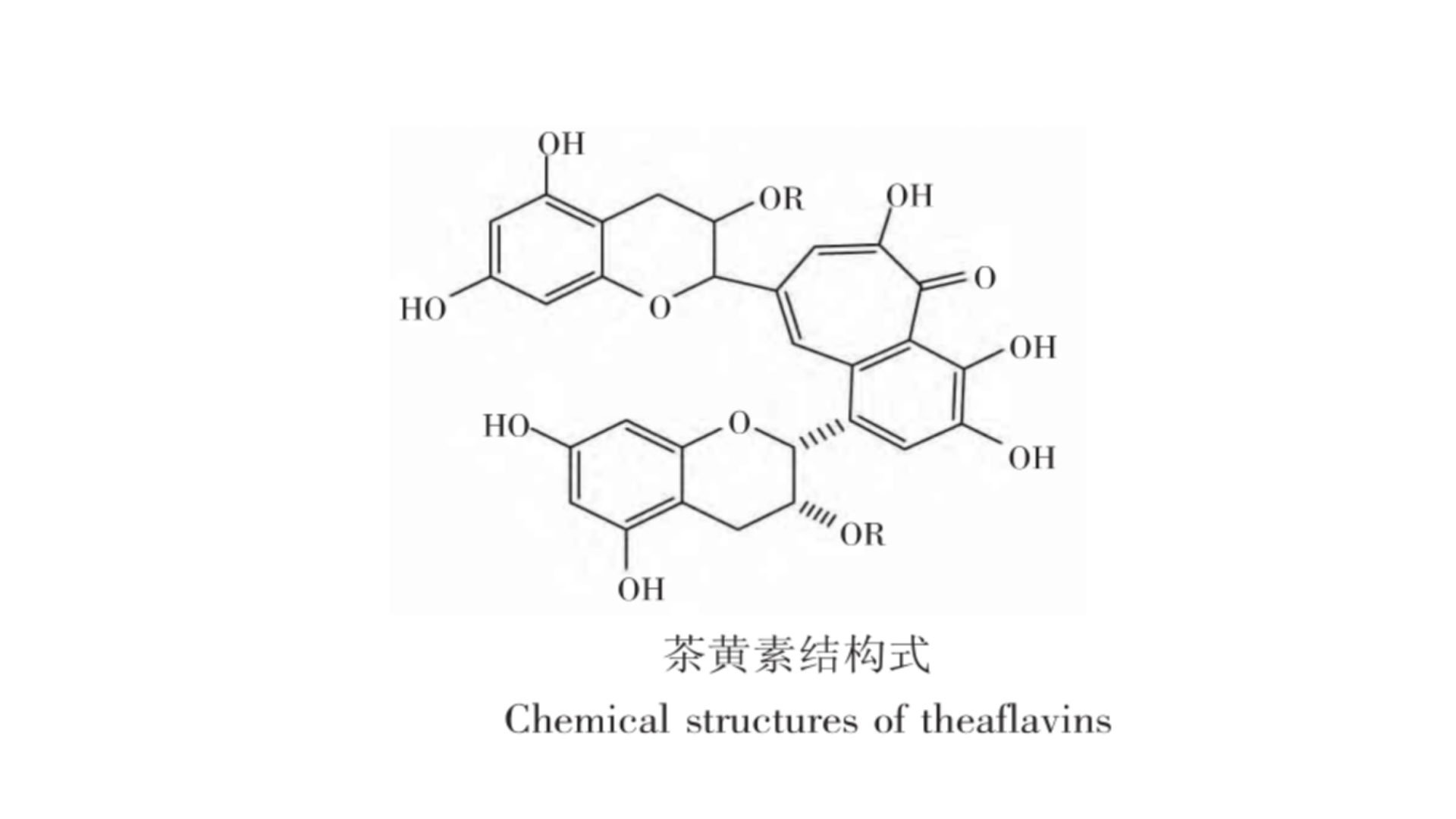
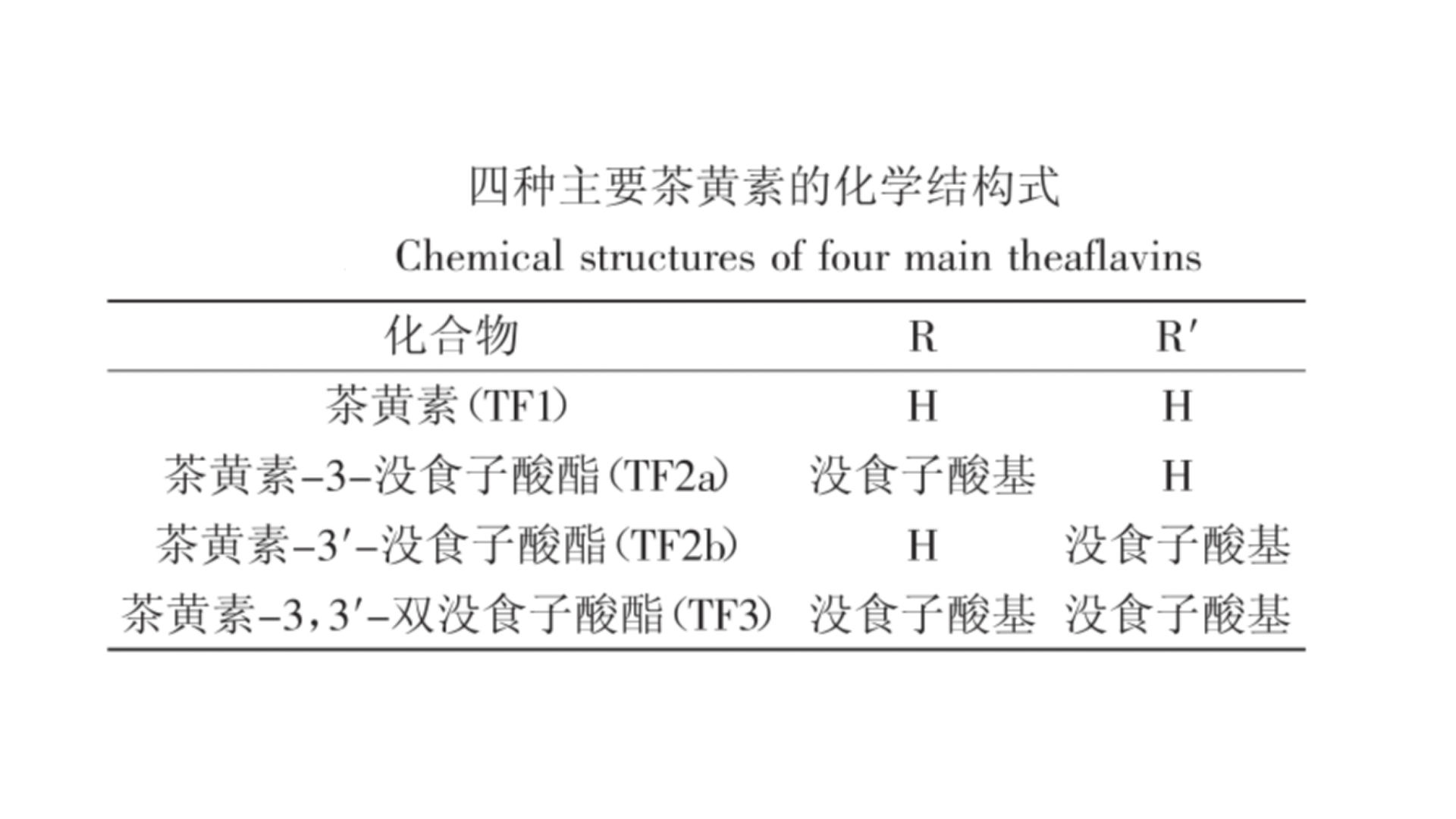
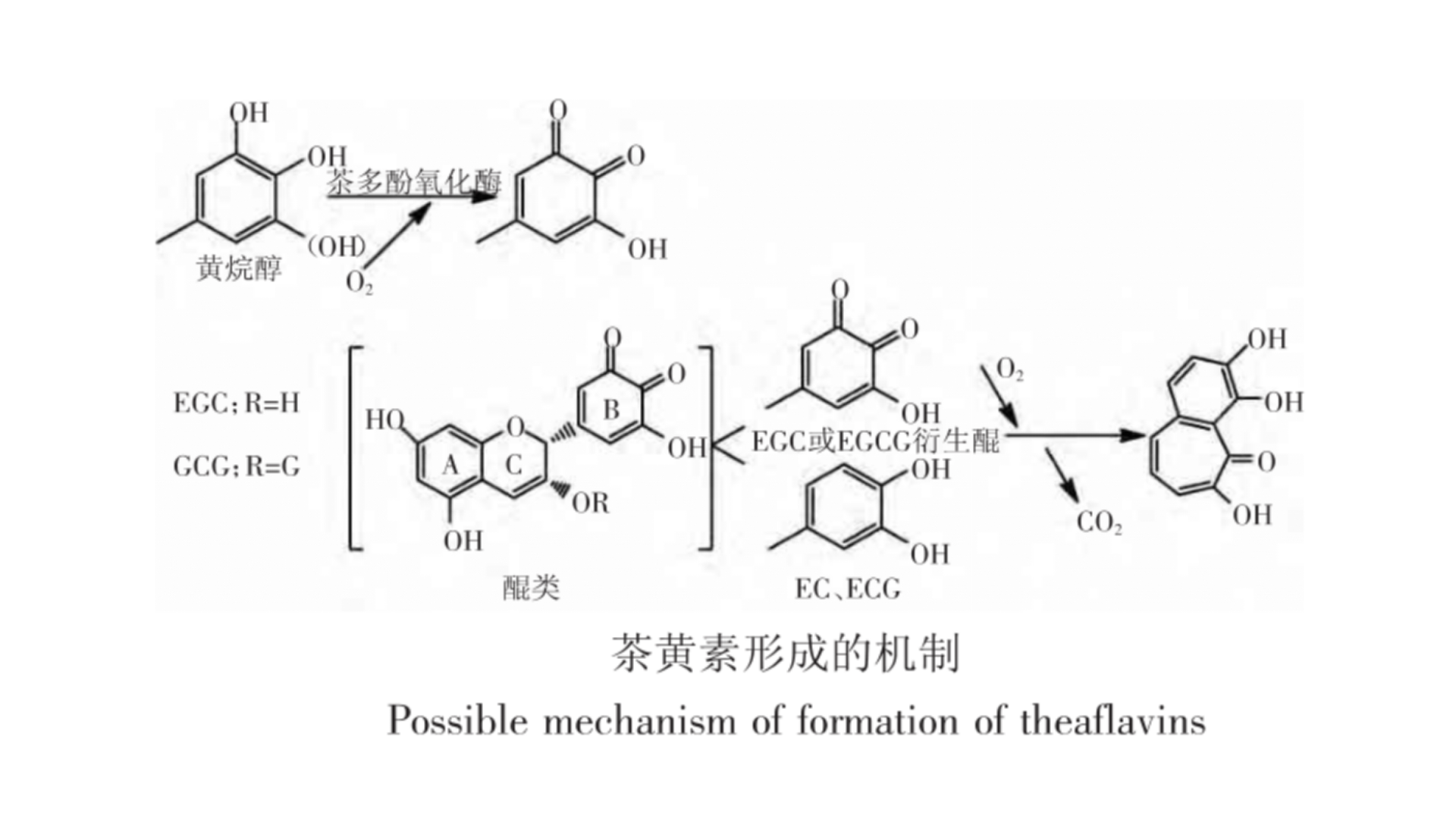
テアフラビン(Theaflavin、TF)は、紅茶が発酵する過程で、カテキンがポリフェノールオキシダーゼの触媒作用により縮合して生成される水溶性の茶色素です。テアフラビン(TF)、テアフラビン-3-ガロイルエステル(TF-3-G)、テアフラビン-3'-ガロイルエステル(TF-3'-G)、テアフラビン-3,3'-ジガロイルエステル(TFDG)の4種類の主要な単体から構成され、紅茶の乾燥重量の0.5%~3%を占め、「お茶の中のソフトゴールド」と称されています。
以下は、テアフラビン成分の効果に関する科学的解説です。機能活性に関する記述は、当サイトが挙げた文献を参考にしています。
強力な抗酸化作用で、老化を遅らせる
フリーラジカルを除去する効率は、ビタミンE(50倍)、ビタミンC(30~50倍)よりも優れており、活性酸素(ROS)を直接消去し、金属イオンをキレート化し、脂質過酸化を抑制することで、細胞膜およびDNAを酸化損傷から保護します。また、スーパーオキシドディスムターゼ(SOD)、グルタチオンなど内因性の抗酸化システムを活性化し、酸化ストレスのマーカー(例:マロンジアルデヒドMDA)を減少させ、細胞および生体の老化を遅らせます。
脂質代謝を調整し、心臓と脳の血管を保護する
肝臓におけるHMG-CoA還元酵素(コレステロール合成の鍵となる酵素)を抑制し、コレステロールの生成を減少させます。また、腸管で胆汁酸と結合してその排泄を促進するため、総コレステロールおよび「悪玉コレステロール」(LDL-C)を二重に低下させます。臨床試験では、12週間連続摂取によりLDL-Cが16.4%、総コレステロールが11.3%低下することが示されており、肝毒性はありません。血管内皮を保護し、一酸化窒素(NO)の生体利用率を向上させることで、血管を拡張し血中粘度を低下させ、血小板凝集および泡沫細胞の形成を抑制し、動脈硬化の進行を遅らせます。
抗炎症と免疫調節
NF-κBやPI3K/Aktなどの炎症経路を抑制し、TNF-α、IL-1β、IL-6などの促炎症因子の発現を低下させ、慢性炎症による損傷を軽減します。腸内細菌叢の構造を調整し、腸管の免疫バリアを強化し、免疫細胞の活性を改善することで、病原体に対する生体の抵抗力を高めます。
抗腫瘍と併用化学療法
がん細胞のアポトーシスを誘導し(例えばBax/Caspase経路の活性化)、増殖および転移を抑制します(例えばSTAT3やEGFRシグナルを阻害)。肝がん、乳がん、大腸がんなど、多様な腫瘍細胞に対して抑制効果を示します。化学療法薬と併用することで耐性を低下させ、正常細胞への薬物の毒性副作用を軽減し、治療効果を向上させます。
代謝を調整し、糖脂質異常を改善する
α-グルコシダーゼの活性を抑制し、食後血糖値の上昇を遅らせる。インスリン抵抗性を改善し、インスリン感受性を高め、2型糖尿病の予備段階における介入に適している。脂肪酸合成酵素(FAS)および脂質吸収を抑制し、脂肪蓄積を減少させ、体重および体脂肪率の管理を補助する。
抗菌・抗ウイルス作用で粘膜の健康を守る
広域にわたってグラム陽性・陰性菌(例:ヘリコバクター・ピロリ、ミュータンス菌)を抑制し、細菌の細胞膜の完全性を破壊することで、歯垢およびう蝕のリスクを低減します。インフルエンザウイルス、新型コロナウイルス(SARS-CoV-2)、HIVなどのエンベロープを持つウイルスを抑制し、ウイルスのスパイクタンパク質と受容体との結合を阻害するとともに、ウイルス複製の鍵となる酵素(例:3CLプロテアーゼ、RdRP)を阻害することにより作用します。

中国江蘇省無錫市濱湖区馬山工業園区梁康路 19 番地
 +86 510-85998259
+86 159 5501 8397
+86 510-85998259
+86 159 5501 8397
 sales@teaturn.com

 WeChat


COPYRIGHT © 無錫世紀生物工程有限公司 ALL RIGHTS RESERVED. テクニカルサポート:明図ネットワーク ICP备案号:苏ICP备2021017639号-1